INTRODUCTION
Red rice is recognized as a nutrient-rich cereal with bioactive compounds including phenolic acids, flavonoids, and proanthocyanidins [Rodrigues et al., 2024]. These compounds are associated with antioxidant activity, metabolic regulation, and cancer prevention, making red rice a promising ingredient of functional foods [Baptista et al., 2024; Chen et al., 2025]. Similar to other unpolished rice, red rice is generally less preferred by consumers due to its relatively firm texture and the presence of hay-like notes, which are often regarded as undesirable sensory characteristics [Munarko et al., 2025]. Germination has been widely applied as an effective strategy to enhance both the eating quality and bioactive profile of rice [Jiamyangyuen & Ooraikul, 2007; Wang et al., 2016]. Among these bioactive compounds, γ-aminobutyric acid (GABA) has attracted particular attention due to its physiological roles in blood pressure regulations, stress modulation, and potential gut-brain axis interactions [Liwinski et al., 2023]. However, native GABA levels in ungerminated rice are relatively low, limiting its functional potential.
Germination has been widely applied as a bioprocessing strategy to enhance GABA accumulation in rice. Conventional germination methods generally involve full soaking of rice until coleoptile emergence or partial soaking followed by incubation under humid conditions [Munarko et al., 2021]. Although these approaches effectively enhance GABA content, they have drawbacks due to the need for frequent water replacement every 3–6 h to prevent microbial spoilage, resulting in high water consumption and wastewater generation. Membrane bioreactor systems have been proposed as an alternative, allowing water recirculation through microfiltration membranes during germination without replacement. This approach maintains soaking water quality and yields germinated rice with higher GABA content and antioxidant activity compared to manual soaking [Sitanggang et al., 2021]. However, continuous immersion may promote leaching of soluble bioactive compounds and does not fully eliminate microbial growth, particularly when microorganisms can pass through membrane pores or persist on seed surfaces [Gaveau et al., 2017]. Previous studies have also indicated that partial soaking combined with incubation under atmospheric conditions resulted in higher GABA accumulation than full immersion, suggesting that prolonged water contact may negatively affect bioactive retention [Munarko et al., 2021]. Therefore, alternative germination configurations that balance hydration, bioactive retention, and microbial control are required.
A partially circulated germination system represents a modification of conventional soaking, combining periodic water spraying with recirculation through a filtration unit [Chungcharoen et al., 2024]. This configuration aims to maintain seed imbibition under controlled moisture conditions while reducing prolonged water contact and minimizing bioactive loss. Nevertheless, microbial proliferation during germination remains a critical issue, as the warm and humid environment favors rapid bacterial growth [Chen et al., 2024]. Ultraviolet (UV) irradiation has been widely applied in water treatment systems due to its chemical-free microbial inactivation capability [Kumar et al., 2025]. Integrating UV treatment within a recirculated germination system may provide an additional hurdle for microbial growth, although, its effectiveness in the system containing an organic load and suspended particles remains uncertain [Nooshabadi & Hashemi, 2024].
In addition to microbial enumeration, understanding the composition of microbial communities during germination is increasingly important. Seed-associated endophytes and environmental bacterial can influence both seedling development and product safety [Chen et al., 2024]. High-throughput sequencing approaches provide an opportunity to characterize microbial dynamics beyond conventional culture-dependent methods, enabling more comprehensive microbiological food safety risk assessment [Nanfack et al., 2024].
Despite advances in germination technology, limited information is available regarding the integration of partial water circulation and UV-assisted recirculation, as well as their effects on GABA content and microbial community composition during red rice germination. Therefore, the present study aimed to evaluate the effects of germination time and UV treatment within a partially circulated germination system on GABA accumulation, microbial load, and bacterial community composition in red rice. The findings are expected to provide insight into sustainable germination design and microbial risk consideration for functional rice production.
MATERIALS AND METHODS
Materials
Commercial organic red rice (var. A3) was purchased from PT. Sirtanio Organik Indonesia (Banyuwangi, East Java, Indonesia). Sodium hypochlorite (NaOCl) was obtained from Onemed (Sidoarjo, Indonesia). Sodium chloride (NaCl), plate count agar (PCA), and de Man, Rogosa and Sharpe agar (MRSA) were purchased from HiMedia (Thane, India), while calcium carbonate (CaCO3), hydrogen peroxide (H2O2), trichloroacetic acid (TCA, 10%), and α-aminobutyric acid (AABA) standard were from Merck (Darmstadt, Germany). Additional reagents included AccQ•Tag reagent kit (Waters Corporation, Milford, MA, USA), Quick-DNA Magbead Plus Kit (Zymo Research Corporation, Irvine, CA, USA), and KOD Multi & Epi (Toyobo, Osaka, Japan).
Design of germinator
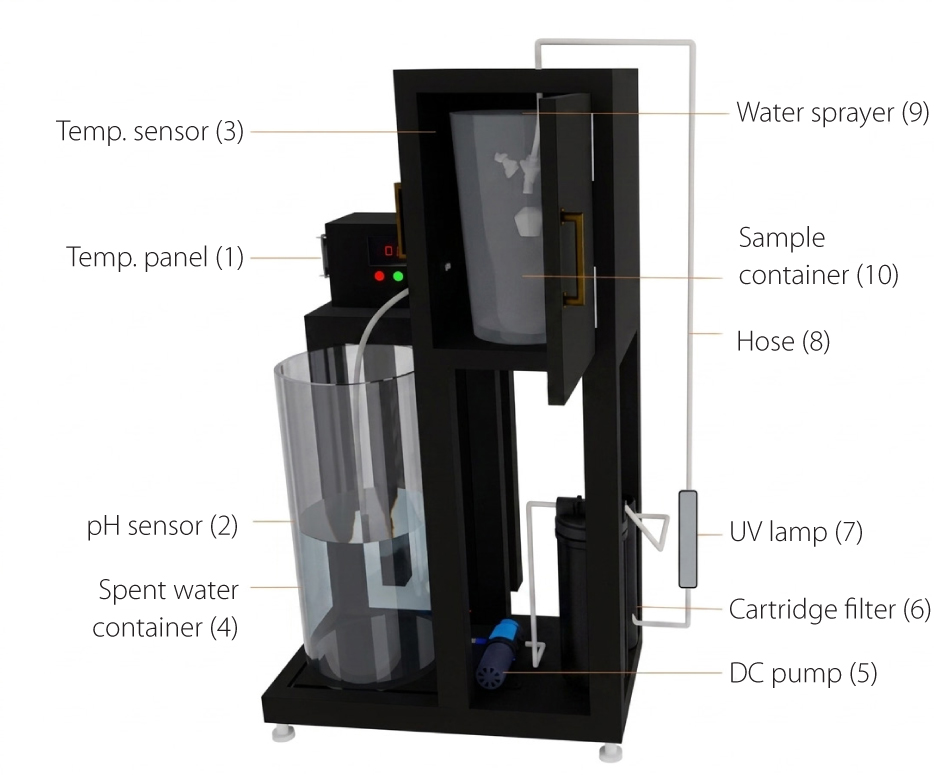
The schematic design of the partially circulated germinator is shown in Figure 1. The system consisted of two poly(methyl methacrylate) containers: container 1 (bottom) (4) serving as the spent water reservoir equipped with a pH sensor (2), and container 2 (top) (10) for germination, with a temperature sensor (3) and water sprayer (9). Water from container 1 was circulated by a direct current (DC) pump (HIU, China) (5) through a polypropylene microfiltration membrane (Nanotec, Cikarang, Indonesia) (6) with or without using a UV-C lamp (MILE, Indonesia) (7) and sprayed onto rice samples in container 2 via a ¼-inch (0.635 cm) hose (8). The UV-C lamp used had a length of 35 cm, a power of 16 W, and operated at a flow capacity of 15 L/min. The sprayed water then returned by gravity through a valve to container 1 for recirculation. Circulation intervals and durations were regulated using an automatic timer switch (Vetto, Tangerang, Indonesia). Real-time monitoring of pH and temperature was carried out using an Adafruit IoT system (Adafruit Industries, LLC, New York, NY, USA).
Germination procedure
Red rice grains were surface-sterilized with 0.1% (v/v) sodium hypochlorite for 30 min, rinsed thoroughly with tap water, and placed in the germinator. Germination was performed at room temperature (±30°C) with water circulation every 90 min for 5 min. For UV treatments, a UV lamp was installed after the filtration unit, while in the non-UV condition, the lamp was removed and replaced by a hose. pH values and temperatures were continuously recorded in real time during germination. Data were logged at 5-min intervals. Germination was carried out for 24, 48, and 72 h. At each time point, samples of circulation water were collected for analysis of total lactic acid bacteria (LAB) count and total plate count (TPC), while fresh germinated rice samples were tested for germination percentage, sprout length, and LAB count. After germination, rice samples were dried in a dehydrator at 45°C for 2 h, ground to 80 mesh, and analyzed for GABA content and TPC. The treatment yielding the highest GABA content was further subjected to microbial diversity analysis.
Analysis of germination performance parameters
Germination rate was determined by counting the number of germinated grains among ~50 randomly selected seeds per treatment, expressed as a percentage of the total seeds. Sprout length (shoot and radicle) was measured from 25 randomly selected germinated seeds per treatment using a digital caliper (Ningbo Deli Tools Co., Ltd, Hangzhou, Zhejiang, China).
Determination of γ-aminobutyric acid content
GABA content was determined following the method described by Rohman & Gandjar [2007] with modifications. Briefly, 0.1 g of rice flour was hydrolyzed with 5 mL of 6 M HCl at 110°C for 22 h, diluted to 50 mL with distilled water, and filtered (0.45 μm membrane). Filtrates (500 μL) were mixed with 40 μL of α-aminobutyric acid (AABA, internal standard) and 460 μL of ultrapure water. Derivatization was carried out by mixing 10 μL of the sample with 70 μL of AccQ•Tag fluor borate buffer and 20 μL of AccQ•Tag reagent, followed by incubation at 50°C for 10 min. The derivatized samples were injected (1 μL) into an ultra-performance liquid chromatography (UPLC) system equipped with a C18 ODS column and a photodiode array detector set at 260 nm. Gradient elution was performed using eluent A (AccQ•Tag Ultra Eluent A, 100%) and eluent B (AccQ•Tag Ultra Eluent B and water, 10:90, v/v). The GABA concentration in the samples was quantified based on the peak area ratio of the analyte to the internal standard. Results were expressed in g per 100 g of dried rice.
Total microbial count analysis
The total microbial load was determined following the United States Food and Drug Administration (FDA) Bacteriological Analytical Manual (BAM) method [Maturin & Peeler, 2001]. One gram of rice flour or one mL of circulation water was suspended in 9 mL of a sterile NaCl solution and serially diluted up to 10−5. Aliquots (1 mL) of each dilution were plated on the plate count agar in triplicate and incubated at 37°C for 24 h. Plates with 25–250 colonies were selected for enumeration, and results were expressed as log CFU/g for rice samples and log CFU/mL for water samples using the standard BAM formula.
Total lactic acid bacteria count analysis
Total LAB count analysis was conducted following BAM protocol with modification [Kurnianto et al., 2025; Maturin & Peeler, 2001]. One gram of fresh germinated rice or one mL of circulation water was diluted in 9 mL of a sterile NaCl solution, serially diluted to 10−5, and plated on MRSA. Plates were incubated at 37°C for 48 h, and colonies were counted on plates containing 25–250 colonies. Results were expressed as log CFU/g for rice samples and log CFU/mL for water samples.
Microbial diversity analysis
Microbial community diversity analysis was conducted on freshly germinated red rice from a selected sample based on the highest GABA content. The analysis was performed based on the method described by Yang et al. [2023] with adjustments. DNA was extracted using the Quick-DNA MagBead Plus Kit. DNA concentration and purity were assessed using a Nanodrop spectrophotometer (Thermo Scientific, Waltham, MA, USA) and a Qubit fluorometer (Thermo Scientific). The V3–V4 region of the 16S rRNA gene was amplified using primers 341F and 805R. Polymerase chain reaction (PCR) products were verified by 1% agarose gel electrophoresis, purified with Agencourt AMPure XP beads, and quantified using a Qubit 2.0 fluorometer and a Bioanalyzer (Agilent, Santa Clara, CA, USA). Libraries were quantified by qPCR and sequenced on the Illumina MiSeq platform (Illumina, San Diego, CA, USA).
Statistical analysis
Data were expressed as means and standard deviations (SD). Statistical analysis was performed using SPSS version 22.0 (Statistical Graphics Corp., Princeton, NJ, USA). Two-way analysis of variance (ANOVA) was used to evaluate the importance of the significant factors (UV treatment, germination time, and their interaction). Duncan’s multiple range test was applied to assess the significant differences between samples. Microbial diversity data were interpreted descriptively based on relative abundance.
RESULTS AND DISCUSSION
pH stability during germination
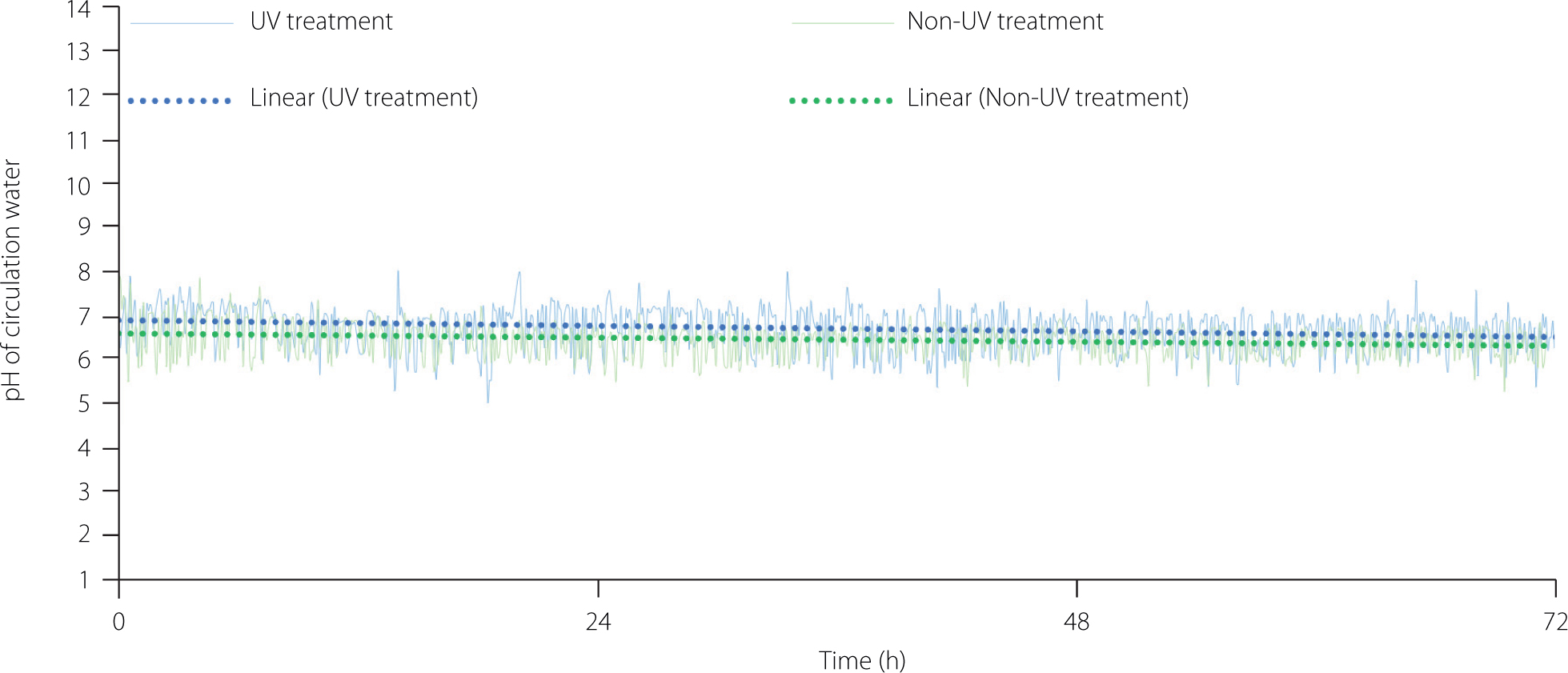
The circulated water maintained relatively stable pH values close to neutrality throughout the germination period in both the UV and the non-UV system (Figure 2). This finding indicates that the partially circulated germinator effectively preserved the pH of the germination medium during the entire germination period. Similar observations were reported in our previous study [Munarko et al., 2021], which demonstrated that a microfiltration-based membrane reactor could maintain stable pH levels more efficiently than conventional soaking methods with periodic water replacement. Moreover, Sitanggang et al. [2021] observed a decline in water pH of up to 1.5-fold during rice soaking without water exchange, whereas membrane-based reactors kept the pH relatively stable, suggesting that the buffering effect of continuous recirculation likely contributed to maintaining stable environment condition preventing microbial proliferation.
Germination performance parameters
The germination rate and the sprout length of red rice treated in the partially circulated germinator are shown in Figure 3. A two-way ANOVA showed significant effect of the interaction (p<0.05) between germination time and UV treatment on germination percentage and root length. Moreover, germination rate increased significantly (p<0.05) with prolonged germination time. The highest percentage was 64.3%–70.3% at 72 h, while the lowest values (49.5%–52.6%) were recorded at 24 h. In terms of seedling development, shoot length reached 3.00 mm (process without UV irradiation) and 5.12 mm (upon UV treatment), while root length ranged from 0.40 mm to 4.15 mm after 72 h. Shoots became visible after 24 h of germination, whereas radicle emergence was only observed after 48 h, indicating different developmental dynamics between the two organs. This pattern aligns with earlier reports indicating that shoot growth rates often exceed those of roots during germination [Ramírez-Olvera et al., 2018].
Figure 3
Germination rate (A), root length (B), and shoot length (C) of germinated red rice produced in a partially circulated germinator with and without UV treatment. Different lowercase letters indicate significant differences among germination times within the same treatment (p<0.05). Different uppercase letters indicate significant differences between the UV and non-UV treatments at the same germination time (p<0.05).
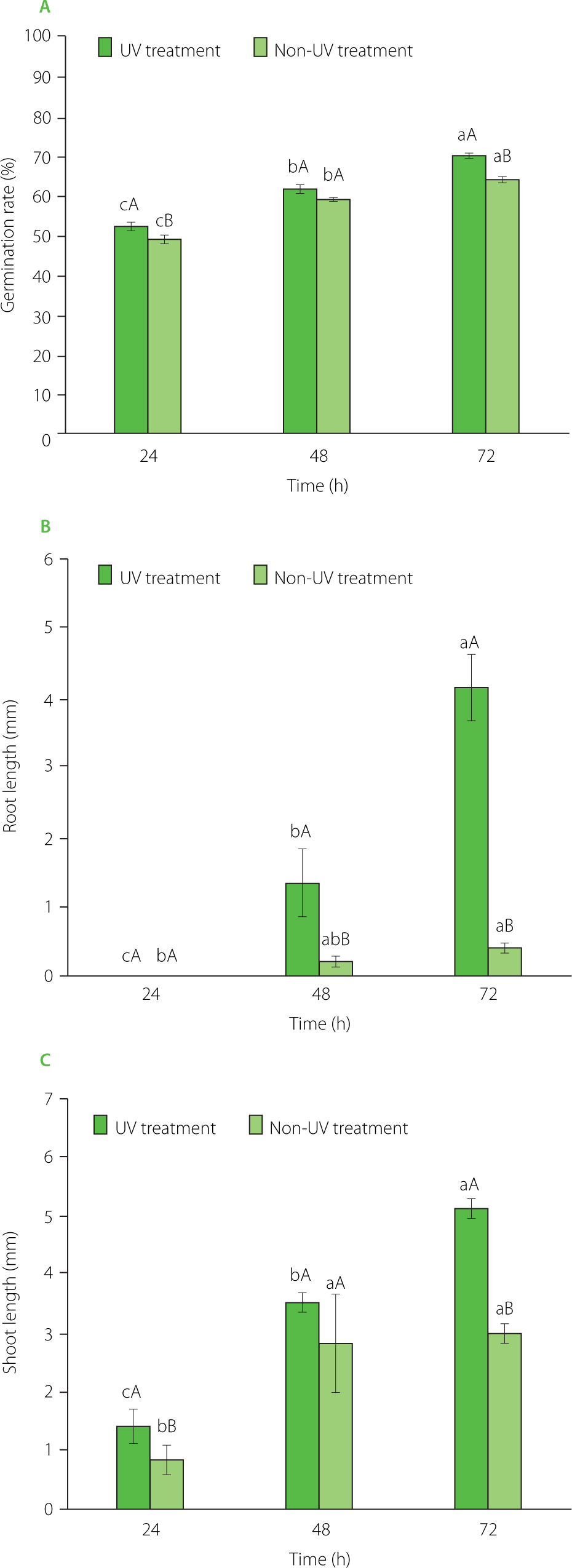
UV treatment significantly (p<0.05) enhanced all germination performance parameters, particularly shoot and root lengths (Figure 3). This enhancement may be attributed to improved water quality under UV treatment. The findings of this study are consistent with previous research on okra seeds, which reported that although different water sources did not significantly affect the overall germination percentage, higher quality water contributed to a faster rate of sprout elongation [Nana et al., 2019].
γ-Aminobutyric acid production during germination
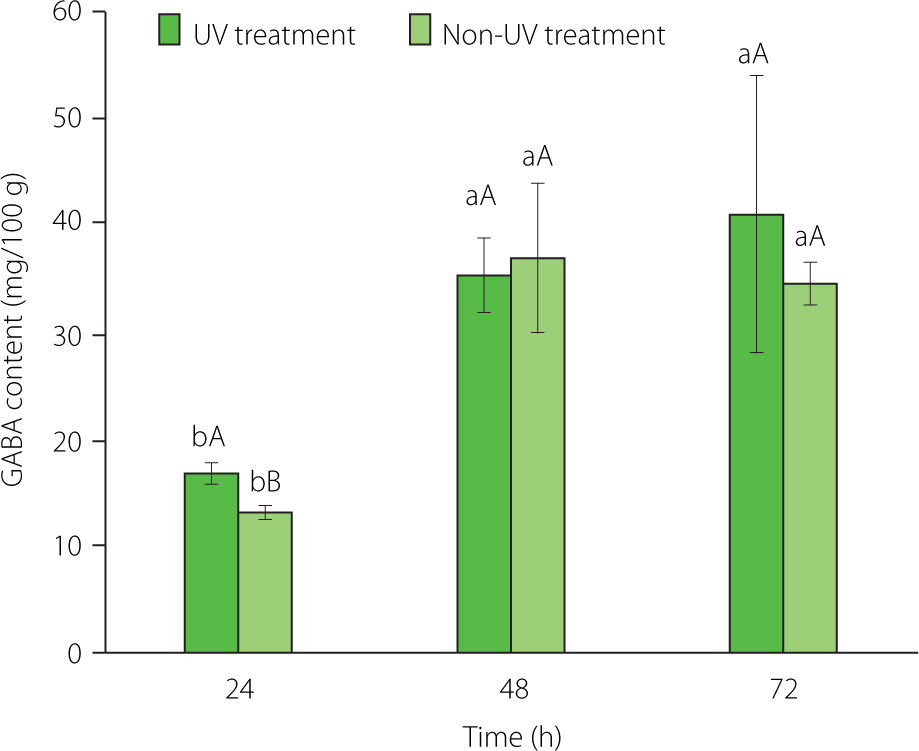
The content of GABA in red rice germinated in the partially circulated germinator with and without UV treatment is shown in Figure 4. Germination with this system effectively enhanced GABA content over time. After 24 h, GABA levels reached 17.03 mg/100 g in the UV-treated group compared to 13.16 mg/100 g in the non-UV group. Contents increased significantly (p<0.05) at 48 h, reaching 35.38 and 36.73 mg/100 g, respectively. However, no significant (p≥0.05) increase was observed between 24 and 72 h, with levels of 40.99 mg/100 g for UV and 34.39 mg/100 g for non-UV treatments at 72 h. No significant (p≥0.05) interaction between UV treatment and germination time was detected, indicating that GABA accumulation was predominantly governed by germination time. The effect of UV treatment was limited to the early stage of germination and became negligible at later stages.
Figure 4
γ-Aminobutyric acid (GABA) content in red rice germinated in a partially circulated germinator with and without UV treatment. Different lowercase letters indicate significant differences among germination times within the same treatment (p<0.05). Different uppercase letters indicate significant differences between the UV and non-UV treatments at the same germination time (p<0.05).
The increase in GABA levels with prolonged germination is consistent with previous studies on various rice cultivars under different germination methods [Munarko et al., 2022; Wang et al., 2016]. In cereal grains, GABA is mainly synthesized via the GABA shunt pathway, where glutamate undergoes decarboxylation by glutamate decarboxylase (GAD) activity, with minor contributions from the polyamine degradation pathway [Ansari et al., 2021; Shelp et al., 2012; Zhu et al., 2022]. The efficiency of GABA accumulation is strongly influenced by the germination method. Sitanggang et al. [2021] demonstrated that the use of membrane bioreactors significantly improved GABA levels compared to conventional soaking [Sitanggang et al., 2021]. Similarly, our previous study [Munarko et al., 2021] showed that partial soaking combined with incubation under humid conditions resulted in a higher GABA content in germinated rice than either full soaking or conventional partial soaking. The partially circulated germinator used in this study represents a further refinement of the membrane-based partial method by integrating periodic water spraying with membrane filtration and recirculation. The results showed that in this system GABA was also efficiently produced during rice germination.
UV irradiation applied to the circulating water as a decontamination step in our system, was expected to support germination efficiency and GABA accumulation. It was proved at 24 h (Figure 3). However, the lack of significant differences (p≥0.05) for 48- and 72-h samples, suggests that UV treatment may contribute to early-stage of germination. As germination progressed, the influence of UV treatment on metabolic responses became less pronounced, possibly because metabolic changes associated with prolonged germination played a more dominant role. The position of the UV light appears to be a critical factor as well. Zhu et al. [2023] demonstrated that placing UV-C irradiation directly in the germination chamber (180 μW/cm2 for 8 h per day) significantly enhanced GABA accumulation. Likewise, Yan et al. [2021] reported that UV-C treatment at the dose of 4 kJ/m2 increased GABA content in tomato fruits during storage by regulating the genes involved in GABA metabolism. These findings suggest that further research should investigate the direct application of UV irradiation within the germination chamber to optimize GABA synthesis in germinated rice.
Microbial proliferation
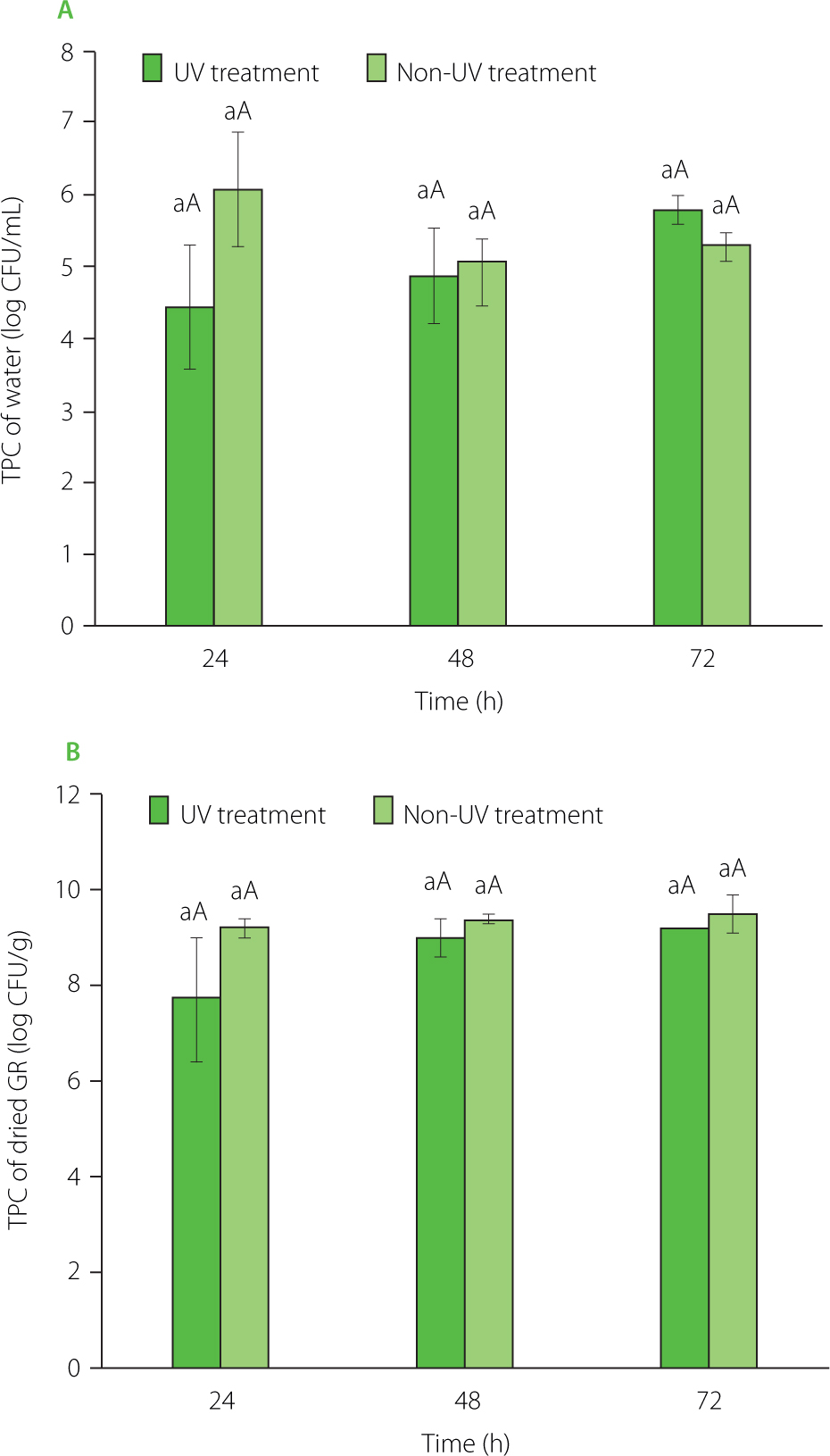
Total plate counts in circulation water under both UV and non-UV treatments ranged from 4 to 6 log CFU/mL (Figure 5A). At 24 h of germination, the microbial load was numerically lower in the UV-treated samples than in the non-UV-treated samples for both the circulated water and dried germinated rice; however, these differences were not statistically significant (p≥0.05) (Figure 5B). Similarly, no significant differences in the TPC of the circulation water were observed between UV and non-UV treatments after 48 and 72 h of germination (p≥0.05). The TPC of dried rice ranged from 7.76 to 9.44 log CFU/g after 24–72 h of germination and was not significantly affected by germination time, UV treatment, or their interaction (p≥0.05). These results align with the study by Zhang et al. [2018], who observed microbial counts exceeding 9 log CFU/g after 24 h of soaking of brown rice, with sustained proliferation during germination. Cereal grains inherently harbour diverse microbial populations originating from field environments, harvesting, and post-harvest handling process. Several investigations have demonstrated that microbial populations in rice and other sprouted grains increase significantly during germination due to favourable moisture and nutrient availability [Cotter & Hill, 2003]. The germinated rice was dried in our study at 45°C. Although drying at this temperature reduced seed moisture, it was insufficient for microbial inactivation. Vegetative bacterial cells generally require 60°C for thermal inactivation, and even higher temperatures under moist conditions are necessary to inactivate spores [Cebrián et al., 2017]. Consequently, many microorganisms likely survived or entered dormancy, leading to relatively high microbial counts per gram of dry material despite water removal.
Figure 5
Total plate count (TPC) of circulated water (A) and dried germinated rice (GR) (B). Production was performed in a partially circulated germinator with and without UV treatment. Different lowercase letters indicate significant differences among germination times within the same treatment (p<0.05). Different uppercase letters indicate significant differences between the UV and non-UV treatments at the same germination time (p<0.05).
The total LAB counts in the circulated water and freshly germinated red rice are shown in Figure 6. At 24 h of germination, total LAB count in water did not differ significantly between the UV and non-UV treatments (p≥0.05). A significant difference was observed at 48 h, with the LAB population reaching 5.05 log CFU/mL in the non-UV treatment, whereas the UV treatment maintained a lower population of 3.65 log CFU/mL (p<0.05). However, by 72 h of germination, LAB populations had increased to approximately 5 log CFU/mL in both treatments, with no significant difference between them (p≥0.05).
Figure 6
Total lactic acid bacteria (LAB) count of circulation water (A) and freshly germinated rice (GR) (B). Production was performed in a partially circulated germinator with and without UV treatment. Different lowercase letters indicate significant differences among germination times within the same treatment (p<0.05). Different uppercase letters indicate significant differences between the UV and non-UV treatments at the same germination time (p<0.05).
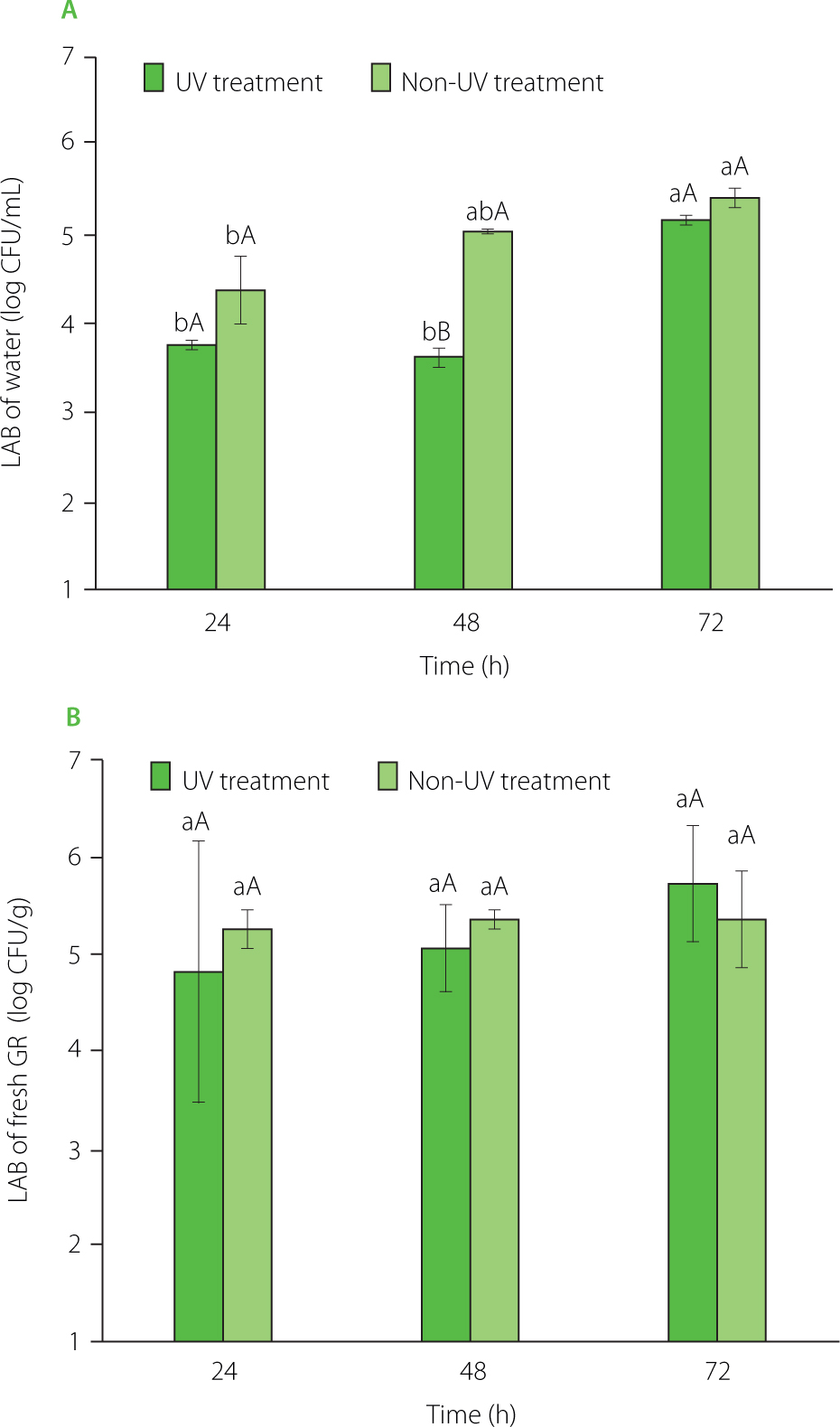
UV-C irradiation at wavelengths between 200 and 280 nm is known to exert germicidal effects by inducing DNA damage and impairing microbial replication [Kowalski, 2009]. Previous studies by Moore et al. [2025] and Scarlett et al. [2016] demonstrated significant microbial inactivation by UV-C in water-based systems. The limited long-term effectiveness of UV treatment observed in our study may be associated with several factors. First, organic compounds released from germinating seeds can accumulate in the circulating water, increasing turbidity and reducing UV transmittance. Dissolved organic matter may absorb or scatter UV radiation, thereby shielding microorganisms from direct exposure [Scarlett et al., 2016]. Second, microorganisms attached to the surface of germinating grains continuously detach and re-enter the circulating water during spraying cycles, resulting in repeated microbial inoculation within the system. These mechanisms have also been reported in water treatment system where UV efficiency decreases in the presence of organic load or suspended solids [Kováříková et al., 2024].
Microbial community composition based on metagenomic analysis
Metagenomic analysis provided deeper insight into the microbial communities associated with germinated rice beyond what can be obtained from culture-based enumeration. It was performed on freshly germinated red rice sample under non-UV treatment at 48 h. This treatment was selected due to its high GABA content, which was not significantly different from that observed under UV treatment or longer germination durations, making it a suitable representative model for microbial diversity analysis. In addition, this sample was chosen considering the potential for higher microbial loads, particularly bacteria, due to the absence of selective pressure from ultraviolet treatment. The sequencing results (Figure 7) revealed that the microbial community in germinated rice was dominated by several bacterial genera commonly associated with plant environments, including Phytobacter (31.17%), followed by Enterobacter (11.26%) and Cronobacter (10.47%). The high moisture content and release of nutrients during germination may provide favorable ecological conditions that support the proliferation of diverse bacterial groups [Cotter & Hill, 2003]. These microorganisms are frequently detected in cereal grains and plant tissues and are considered part of the natural microbiota associated with seeds [Eid et al., 2021].
Figure 7
Relative abundance of bacteria at different taxonomy level: phylum (A), class (B), order (C), family (D), and genus (E) of freshly germinated red rice after 48 h of germination under non-UV treatment.
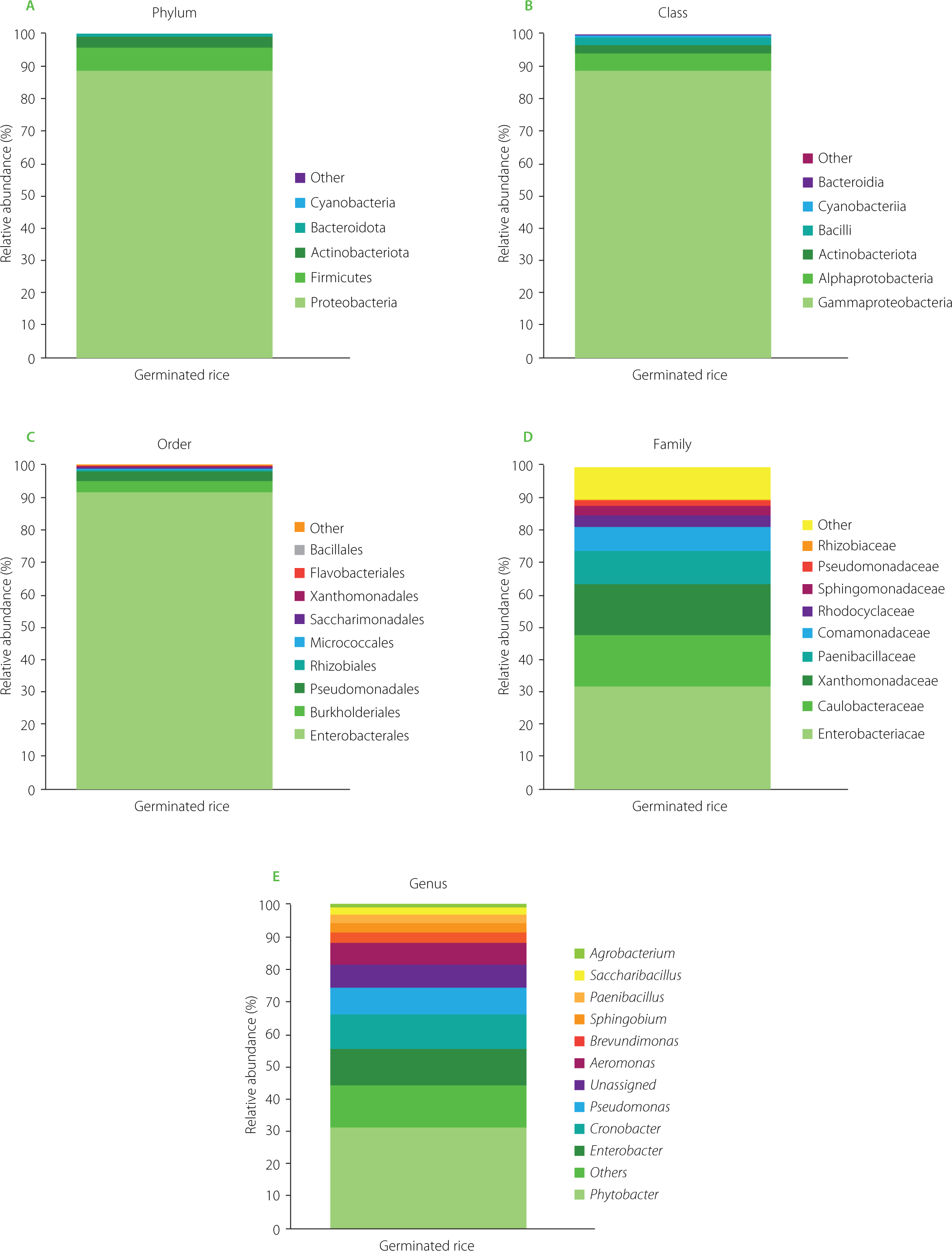
Phytobacter is recognized as a seed-associated endophyte with nitrogen-fixing capacity and functions as a plant growth-promoting bacterium (PGPB) [Jana et al., 2025]. Its dominance is likely attributable to its persistence within seed tissues, where endophytic localization confers resistance to disinfection treatments [Kaga et al., 2009; Kubota et al., 2023]. Similarly, Enterobacter contributes to plant growth through phytohormone synthesis and antimicrobial metabolite production [Ngalimat et al., 2021]. Co-occurrence with Enterobacter may reflect a symbiotic interaction that enhances seedling development [Ng et al., 2012].
An important finding of this study was the detection of Cronobacter spp. within the microbial community. Cronobacter is recognized as an opportunistic pathogen that has been associated with contamination of various plant-derived food from the cultivation, post-harvest handling, or processing environments [Cechin et al., 2023]. This genus is particularly known for its ability to survive in low-moisture environments and persist in dry food matrices. Moreover, Cronobacter species have been associated with severe infections, including meningitis and sepsis, especially in neonates and other vulnerable populations [Koutsoumanis et al., 2014]. Although the relative abundance of Cronobacter detected in this study was low, its presence highlights potential food safety concern in germinated cereal products. The germination process provides a warm and high-moisture environment that can promote microbial proliferation [Yang et al., 2023]. However, relative abundance alone is insufficient to determine food safety risk. A comprehensive hazard assessment should instead be based on absolute microbial counts, strain-specific virulence characteristics, and the intended mode of consumption, particularly whether the product is consumed raw or subjected to a validated kill step [Billington et al., 2022].
Cronobacter spp. are heat sensitive vegetative bacteria. Osaili et al. [2009] reported that temperatures ≥ 70°C resulted in substantial microbial reductions by >4 log units. During high-temperature short-time (HTST) process (67.5°C for 15 s), the most heat- resistant Cronobacter strain was reduced by more than 6.7 log units [Pearce et al., 2012]. These findings indicate that conventional heat treatments, such as pasteurization, boiling, blanching, steaming, and baking, are generally effective in inactivating Cronobacter, although thermal resistance may vary depending on the food matrix.
Beyond these dominant genera, other bacteria such as Pseudomonas, Aeromonas, Brevundimonas, Sphingobium, and Paenibacillus were also detected, shaping the microbial dynamics of germinated rice. While some strains are beneficial, contributing to plant growth promotion and pathogen suppression [Devi & Kalaiselvi, 2020; Quibod et al., 2015; Tariq et al., 2025], others (e.g., Brevundimonas spp.) are opportunistic pathogens in humans [Ryan & Pembroke, 2018]. The microbial community composition observed in this study also reflects the dynamic nature of microbial ecosystems during germination [Dutta et al., 2022]. Germination alters the physicochemical environment surrounding seeds by increasing moisture content, oxygen availability, and nutrient release. These changes create ecological niches that enhance the growth of specific microorganisms capable of utilizing the available nutrients. As a result, microbial diversity and relative abundance can shift significantly during the germination process [Abdelfattah et al., 2021].
Overall, metagenomic analysis provides valuable insights into the microbial ecology of germinated rice and highlights the complexity of microbial communities associated with sprouting systems. While some detected microorganisms may contribute to natural microbial succession during germination, the presence of opportunistic pathogens emphasizes the importance of implementing effective sanitation strategies to ensure microbial safety in germinated grain production.
CONCLUSIONS
The present study demonstrated that a partially circulated germination system can be effectively used to germinate red rice and obtain a product with an increased functional value through GABA accumulation. Although microbial proliferation occurred during germination, the integration of UV treatment provided partial microbial control in the circulating water during the early stages of germination. Metagenomic analysis further revealed that the microbial community was largely dominated by seed-associated bacteria, highlighting the important role of intrinsic seed microbiota in shaping microbial dynamics during germination. Importantly, the partial circulation approach represents a promising strategy for developing more resource-efficient germination systems capable of improving the functional quality of cereal grains while minimizing environmental impact. Future optimization of sanitation strategies combined with water-efficient processing technologies may further improve microbial safety and support sustainable production of germinated functional foods.