INTRODUCTION
Obesity, as a multifactorial metabolic disorder characterized by excess fat accumulation due to an energy imbalance, has become a global nutritional problem, which according to the World Health Organization (WHO), afflicts one in eight people in the world [WHO, 2024]. One primary contributing factor to obesity is the frequent consumption of ultra-processed food, such as instant noodles [Septiani & Sugiatmi, 2026]. Instant noodles are processed foods that contain high calories, saturated fats, and sodium but are generally low in essential nutrients, such as fiber, vitamins, and minerals and are often associated with a high glycemic response and low satiety response [Huh et al., 2017; Salihu et al., 2025]. Conventional instant noodles are predominantly produced using refined wheat flour. The increasing reliance on wheat, particularly in regions where it is not locally produced, raises concerns regarding food system vulnerability [Farhan et al., 2025]. This vulnerability is exacerbated as climate change poses additional challenges to global food security [Begna & Wakweya, 2026], emphasizing the urgent need to diversify staple food sources with climate-resilient crops [Benitez-Alfonso et al., 2023].
Sago (Metroxylon sagu Rottb.) and Bambara groundnut (Vigna subterranea (L.) Verdc.) are underutilized crops that exhibit strong adaptability to marginal environments, drought tolerance, and stable yields under adverse climatic conditions [Bintoro et al., 2018; Tan et al., 2020]. Sago is a traditional source of starch in some tropical regions that contains high levels of carbohydrates, approximately 84.7 g per 100 g of starch [Moshawih et al., 2025], but has a low protein content (0.9 g/100 g starch) [Ministry of Health, 2018]. Consequently, food products developed primarily from sago tend to have a limited protein content; for instance, previous studies have reported that sago-based noodles contain only 3.07 g protein/100 g [Dewita et al., 2019]. In contrast, Bambara groundnut is a legume rich in protein (17–25 g/100 g), with a relatively balanced amino acid profile [Maphosa et al., 2022]. Therefore, the partial substitution of sago starch with Bambara groundnut flour is expected to significantly improve the nutritional quality of sago-based products, particularly by increasing their protein content. The complementary nutritional characteristics of these two climate-resilient crops suggest their potential for the development of nutritionally-enhanced staple foods.
Previous research has demonstrated the effectiveness of legume substitutions in noodle formulations; for instance, substituting wheat flour with 25% chickpea flour increased the protein content of noodles from 12.79 to 15.31 g/100 g [Bayomy & Alamri, 2022]. However, research on the integration of fully climate-resilient crops into instant noodle formulations remains limited. In particular, the combined use of sago starch and Bambara groundnut flour in instant noodles has not been extensively investigated, especially regarding the enhancement of protein and dietary fiber levels and satiety-related outcomes. Given the growing interest in functional convenience foods that support appetite regulation and metabolic health, the evaluation of satiety responses alongside nutritional composition is becoming increasingly relevant.
Therefore, this study aimed to develop instant noodles based on sago starch enriched with Bambara groundnut flour and compare their nutritional quality and satiety properties with those of conventional wheat-based instant noodles. By linking climate resilience, nutritional improvement, and consumer-relevant functional outcomes, this study contributes to the development of sustainable and healthier instant noodle alternatives.
To achieve these objectives, this study was conducted in several stages, including (1) formulation of sago noodles with Bambara groundnut flour, (2) assessment of their physical characteristics and nutritional content, (3) their sensory evaluation, and (4) their satiety index measurement.
MATERIALS AND METHODS
Materials
There were two main materials that have been used in this research, i.e., sago (M. sagu) starch and Bambara groundnut (V. subterranea) beans. The Bambara groundnut was purchased from the traditional market in Bogor, Indonesia. As many as 40 kg of beans have been used in a single run of Bambara groundnut flour. The sago starch (20 kg) was procured from the local farmer in Banggai, Central Sulawesi, Indonesia. Commercial all-salt (Refina, UnichemCandi Indonesia, Sidoarjo, Indonesia), sodium tripolyphosphate (Sodium tripolyphosphate, Aditya Birla Chemicals, Samut Prakan, Thailand), and wheat-based instant noodles (Indomie, Indofood, Jakarta, Indonesia) were purchased at a local market in Bogor, Indonesia.
Production of sago and Bambara groundnut noodles
The production of the sago and Bambara groundnut noodles consisted of two main stages, i.e., sago flour and Bambara groundnut flour preparation, and noodle preparation. To produce sago flour, sago starch was sun-dried for 18 h. Dried sago starch was ground and sieved using an 80-mesh screen to obtain sago flour. To produce Bambara groundnut flour, the beans were soaked for 12 h. Then, they were boiled at 90°C for 10 min to inactivate lipoxygenase and eliminate the beany flavor [Chong et al., 2019]. The beans were dried using a cabinet dryer (CTM SRL Manufacture, Milan, Italy) at 90°C at 10 rpm. Dried beans were milled using a pin disc mill and sieved using an 80-mesh screen to obtain Bambara groundnut flour.
The development of the sago and Bambara groundnut noodle formulations was conducted as a trial-and-error process based on the Agustia et al. [2016] recipe before producing the final noodle product. Formulas of noodles with different flour composition used in this study have been adjusted to the Indonesian National Standard to meet the requirements of instant noodle quality standards [BSN, 2018] and the high-fiber claims for processed food products [Indonesian Food and Drug Authority, 2022]. The formulas contained different ratios of sago flour (SF) and Bambara groundnut flour (BGF): F0 (100% SF), F1 (70% SF:30% BGF, w/w), F2 (60% SF:40% BGF, w/w), and F3 (50% SF:50% BGF, w/w) (Table 1).
Table 1
Formulas of noodles with different ratios of sago flour (SF) and Bambara groundnut flour (BGF).
Sago flour was mixed into 100 mL of water and cooked at 90°C for 1 min until it thickened to produce a gelatinized sago starch. Then, it was mixed with Bambara groundnut flour and other ingredients, including sodium tripolyphosphate (0.5% of recipe ingredients, w/w) and salt (0.5% of recipe ingredients, w/w) using a mixer (Miyako HM-620, Jakarta, Indonesia) until a smooth dough was formed. A dough made from wheat flour, instead of SF and BGF, was also prepared. The noodles were formed using a roll press (Ardin CM2020, Jakarta, Indonesia) with a length of ±15 cm and dried at 105°C for 60 min in an oven (Kirin KBO 190RA, Jakarta, Indonesia). The dried noodles were boiled at 100°C for 7–9 min and allowed to cool to room temperature prior to analysis.
Analysis of physical characteristics
The physical characteristics of the noodles were assessed by evaluating their color and texture. The color was measured using a chromameter (AMT511, Amtast, Lakeland, FL, USA), calibrated with a provided set of black and white plates. The CIELab color space was defined by L*, a*, and b* values, which represent lightness (dark–bright), redness (green–red), and yellowness (blue–yellow), respectively.
The firmness was measured using a texture analyzer (TA. XT Plus, Stable Micro Systems, Godalming, UK). Three strands of cooked noodles were placed parallel to each other on the platform and positioned perpendicular to the Asian Noodle Rig (HDP/ANR) probe. Compression was initiated at a pre-test speed of 1 mm/s, a test speed of 2 mm/s, and a post-test speed of 10 mm/s with a compression distance of 9.9 mm and a strain level of 10%. The test was activated by a trigger force of 0.049 N and trigger distance of 2 mm until the sample was compressed with a force of 0.981 N and break sensitivity of 0.098 N. The firmness value was obtained from the maximum force required to compress the noodle strands, expressed in Newton (N).
Nutrient content determination
The nutrient content determination of sago and Bambara groundnut noodles included determining the moisture content using the gravimetric method (AOAC International method no. 2005:925.10), ash content using the gravimetric method (AOAC 2005:923.03), protein content using the Kjeldahl method (AOAC 2005:955.04), lipid content using the Soxhlet method (AOAC 2005:920.39c), carbohydrate content using the by-difference method, and dietary fiber content (total, soluble and insoluble) using the enzymatic gravimetric method [AOAC, 2005]. The available carbohydrate content was calculated as the difference between the carbohydrate content and the dietary fiber content. The results of nutrient content were expressed on a dry matter basis (db) of noodles.
Sensory evaluation
The research protocol of sensory evaluation has been reviewed and approved by the Human Research Ethics Committee of Bogor Agricultural University in Bogor, Indonesia, with the approval number 1633/IT3.KEPMSM IPB/SK/2025. The sensory evaluation consisted of two tests: a hedonic acceptance test and a quantitative descriptive analysis.
The sensory attributes assessed in the acceptance test included appearance, aroma, taste, mouthfeel, aftertaste, and overall acceptability of noodles. Sensory attributes were assessed using a 9-point hedonic scale ranging from 1 (dislike extremely) to 9 (like extremely), based on the level of preference for each sensory attribute assessed. Thirty semi-trained panelists (23 women and 7 men) aged 18−40 years participated in the study. The inclusion criteria for panelists in the sensory evaluation were as follows: willingness to participate in the sensory evaluation; consistency in decision-making; absence of ear, nose, and throat disorders; normal color vision; no allergies to ingredients contained in the noodle formulations; required to fast for 1 h prior to the sensory evaluation; avoid consuming pungent foods before sensory evaluation; and prohibited using strongly scented cosmetics such as perfumes during the sensory evaluation [ISO 8586:2014].
The quantitative descriptive sensory analysis (QDA) was carried out only on the sago flour noodles (F0; as control) and optimal noodle formula made from SF and BGF in ratio 40:60, w/w (F2). The selection of noodle formula for QDA and satiety index measurement was made by considering the most relevant results from the nutritional composition analysis and hedonic sensory evaluation.
The QDA involved 11 trained panelists who were selected using the Ishihara test, matching test, triangle test, and ranking test. The QDA procedure was carried out in two main stages: a focus group discussion (FGD) to identify sensory attributes, followed by an assessment of the intensity of each attribute. The sensory attributes assessed included aroma, taste, mouthfeel, and aftertaste. The sensory attributes were assessed using an intensity scale ranging from 0 (very weak) to 10 (very strong) [ISO 8586:2014].
Satiety index measurement
The research protocol of satiety index measurement has been reviewed and approved by the Human Research Ethics Committee of Bogor Agricultural University in Bogor, Indonesia, with the approval number 1633/IT3.KEPMSM IPB/SK/2025.
Seventeen subjects participated in this study, including ten women (58.8%) and seven men (41.2%) with an average age of 22.91±1.30 years (Table 2), who were selected using a purposive sampling method. The inclusion criteria for the subjects of this study were as follows: (1) man or woman aged between 20 and 25 years, (2) a normal body mass index (BMI) (18.5−22.9 kg/m2), (3) a normal fasting blood sugar level (<100 mg/dL), (4) no allergies or food intolerance, (5) engaged in light to moderate physical activity, and (6) normal dietary behavior. The exclusion criteria for the subjects of this study were (1) pregnancy or breastfeeding (for female subjects), (2) active smokers, (3) consuming alcohol, (4) experiencing digestive disorders and/or eating disorders, and (5) undergoing medications that can affect eating habits. One subject was excluded due to human error in completing the questionnaire. The satiety scores of the excluded subject exhibited abnormal fluctuations that deviated significantly from those of the other subjects, resulting in outlier data for the satiety index measurement. A sample size of 17 was considered acceptable for a satiety index study [Forde, 2018]. The homogeneity of subject characteristics was determined using the coefficient of variation percentage (%CV). If the %CV ≤5% for body mass index and %CV <33% for fasting blood sugar, then the subject characteristics were considered homogenous [Jamaiyah et al., 2010; Mo et al., 2021]. The %CV was calculated using Equation (1) [Ulijaszek & Kerr, 1999]:
Table 2
Subject characteristics for satiety index assessment.
The satiety index measurement was conducted on four different days with a 6-day washout period between the tested foods to ensure that the physiological condition had returned to normal [Nolan et al., 2016]. Subjects were required to fast for 8–10 h before the test. After fasting, they consumed isocaloric food (240 kcal) and one cup of water (220 mL) within a maximum of 15 min. The isocaloric foods given to the subjects consisted of standard and test foods. White bread was used as a standard food, according to Holt et al. [1995]. The tested foods were F0 (100% SF), F2 (60% SF:40% BGF, w/w), and wheat noodles. According to their energy content, the portion of F0 was 55.9 g, that of F2 was 55.1 g, that of wheat noodles was 37.4 g, and that of white bread was 100.0 g. The tested foods were served with 250 mL of broth and seasonings. Then, the four parameters of the satiety index: (1) hunger score, (2) fullness score, (3) desire to eat score, and (4) food quantity score, were measured using the 100-mm visual analogue scale (VAS) questionnaire at 0, 30, 60, 90, 120, 150, and 180 min after consumption of the tested foods.
The scores of hunger, fullness, desire to eat, and food quantity were plotted on a graph to calculate the area under the curve (AUC). The curve was scaled in units of sampling time (counted in hours) and fullness index, which was expressed as a ruler scale in mm. The AUC was calculated using the trapezoid method and expressed as mm×h. The satiety index was calculated by comparing the AUC of the tested food with that of the standard food for each subject. Then, the satiety index was calculated using Equation (2) based on Holt et al. [1995]:
Statistical analysis
The data for each parameter were presented as mean and standard deviation of triplicated measurements/determinations. Statistical analysis was performed using Excel 2016 for Windows (Microsoft, Redmond, WA, USA) and IBM SPSS Statistics (version 26.0; IBM Corp., Armonk, NY, USA). The results of the determination of the physical characteristics, nutritional composition, hedonic sensory evaluation, and satiety index were analyzed using the one-way analysis of variance (ANOVA), followed by the Duncan’s multiple range test. However, the results of the quantitative descriptive analysis were analyzed using the independent t-test. The differences were considered significant at p<0.05.
RESULTS AND DISCUSSION
Physical characteristics
The firmness values of noodles made from sago and Bambara groundnut flours are shown in Table 3. The incorporation of Bambara groundnut flour into the recipe significantly (p<0.05) decreased the firmness of the noodles compared to those made from sago flour. However, the firmness exhibited no significant difference (p≥0.05) among the F1, F2, and F3 samples. Similar results were reported by Singthong et al. [2026], according to whom the noodles substituted with 50% kidney bean flour had significantly decreased firmness compared to the rice and tapioca flour noodles. The incorporation of legume flour can disrupt the starch structure, which causes firmness reduction [Singthong et al., 2026]. The protein and fiber in legume flour form physical barriers around starch granules and aggressively compete for available water. These macromolecules restrict the swelling required for starch gelatinization, disrupting the formation of the starch gel network. This process may weaken the structural integrity of the noodle matrix, resulting in softer noodles [Singthong et al., 2026].
Table 3
Physical characteristics of noodles made from sago flour (SF) and Bambara groundnut flour (BGF) used in different ratios.
[i] Results are shown mean ± standard deviation. Different superscript letters in each row indicate significant differences at p<0.05, analyzed using Duncan’s multiple range test. F0, noodles made from SF; F1, noodles made from SF and BGF in a 70:30 (w/w) ratio; F2, noodles made from SF and BGF in a 60:40 (w/w) ratio; and F3, noodles made from SF and BGF in a 50:50 (w/w) ratio; L*, lightness; a*, redness; b*, yellowness.
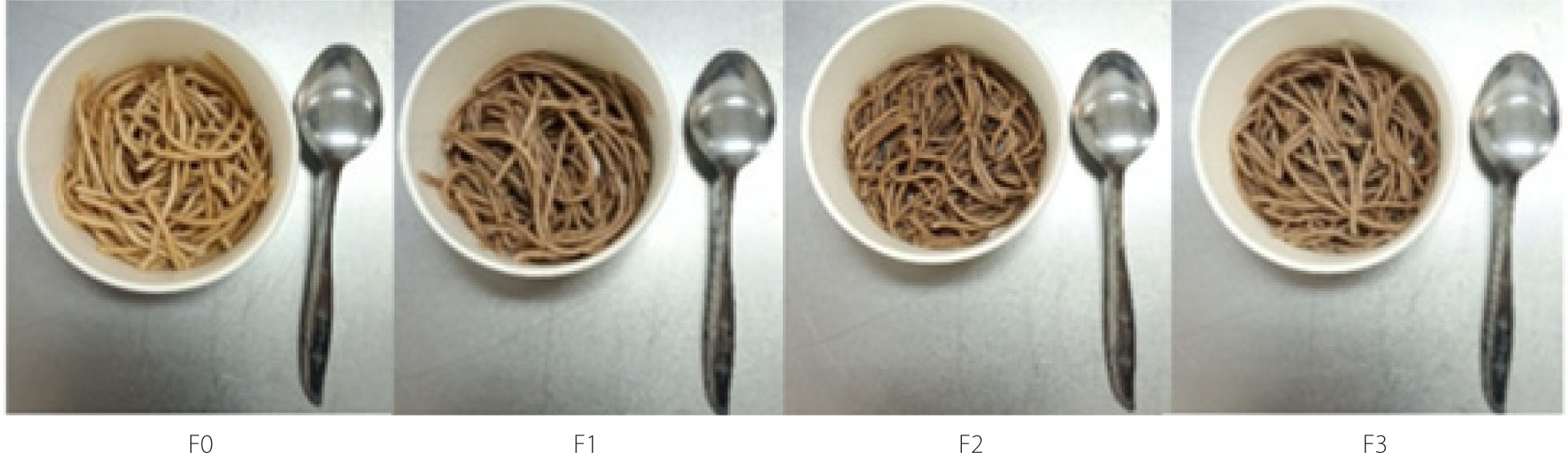
The color coordinate values of the noodles made from sago and Bambara groundnut flours are shown in Table 3. Additionally, the appearance of cooked noodles is presented in Figure 1. The substitution of the Bambara groundnut flour significantly (p<0.05) decreased the lightness (L*), redness (a*), and yellowness (b*) values of noodle color compared to those made from sago flour (Table 3). Similar findings were reported by Mashau et al. [2022], who showed that the crust and crumb of steamed breads fortified with Bambara groundnut flour had significantly lower L* and a* values compared to the steamed wheat bread, although an increase in b* value was noted, in contrast to the noodles in our study. The darker color of the noodles might be due to the presence of color flavonoids and tannins in the Bambara groundnut seeds, especially in the seed coat [Palamae et al., 2024; Pretorius et al., 2023].
Figure 1
Appearance of noodles made from sago flour (SF) and Bambara groundnut flour (BGF) used in different ratios. F0, noodles made from SF; F1, noodles made from SF and BGF in a 70:30 (w/w) ratio; F2, noodles made from SF and BGF in a 60:40 (w/w) ratio; and F3, noodles made from SF and BGF in a 50:50 (w/w) ratio.
Nutritional composition
The nutritional composition of the sago and Bambara groundnut flours as well as noodles made from these flours is presented in Table 4. Data on wheat noodles is also shown in Table 4. The energy value and nutrient content of the noodles made from sago and Bambara groundnut flour were significantly different (p<0.05) from those of wheat noodles. The contents of carbohydrates, available carbohydrates, and total dietary fiber of the noodles made from sago and Bambara groundnut flour were significantly higher (p<0.05) compared to wheat noodles. However, the energy value and contents of protein and lipids of the noodles made from sago and Bambara groundnut flour were significantly lower (p<0.05) than those of the wheat noodles. The use of Bambara groundnut flour in the noodle formula significantly (p<0.05) increased the energy value and contents of protein, lipids, total dietary fiber, soluble dietary fiber, insoluble dietary fiber, and ash of the noodles compared to the control sample made from sago flour. Meanwhile, the substitution of sago starch with Bambara groundnut flour significantly (p<0.05) decreased the carbohydrate and available carbohydrate contents of the noodles compared to the control sample made from sago flour. Similar results were reported by Makhuvha et al. [2024], who found that substituting wheat flour with 25% Bambara groundnut flour in pasta significantly increased the protein, lipid, fiber, and ash contents, while decreasing the carbohydrate content compared to wheat flour pasta. Based on the Indonesian Food and Drug Authority regulation [2022] regarding the supervision of food labeling and advertisements, the developed noodle formulas demonstrate significant potential for nutritional claims. The F0 noodle formula meets the claim criteria for a ‘source of fiber’ food product (≥3 g/100 g), while F1, F2, and F3 formulas for a ‘high-fiber’ food product (≥6 g/100 g). High-fiber foods are associated with higher satiety index scores, leading to a more sustained feeling of fullness [Gerstein et al., 2004]. Consequently, enhancing satiety through fiber intake serves as a strategic approach to mitigating the risk of excess energy intake and subsequent weight gain [Hervik & Svihus, 2019; Savastano et al., 2014].
Table 4
Nutritional composition of wheat noodles and noodles made from sago flour (SF) and Bambara groundnut flour (BGF) used in different ratios.
[i] Results are shown mean ± standard deviation. Different superscript letters in each row indicate significant differences at p<0.05, analyzed using Duncan’s multiple range test. F0, noodles made from SF; F1, noodles made from SF and BGF in a 70:30 (w/w) ratio; F2, noodles made from SF and BGF in a 60:40 (w/w) ratio; and F3, noodles made from SF and BGF in a 50:50 (w/w) ratio; db, dry basis; wb, wet basis.
Sensory characteristics
The results of the sensory characteristics assessment in the hedonic acceptance test of the noodles made from sago flour and Bambara groundnut flour are presented in Table 5. The scoring of the hedonic attributes of F1 and F2 did not differ significantly (p≥0.05). However, the higher proportion of Bambara groundnut flour in the noodle formula resulted in the taste, mouthfeel, aftertaste, and overall acceptance of F3 being significantly (p<0.05) lower rated by panelists than F2. These noodles did not differ significantly (p≥0.05) only in the appearance and aroma. The overall result of the sensory hedonic acceptance test indicates that the noodles made from sago flour and Bambara groundnut flour received hedonic scores between 5 and 6, indicating they fell within the ‘like moderately’ category and were generally accepted by the panelists.
Table 5
Sensory characteristics in the hedonic acceptance test of noodles made from sago flour (SF) and Bambara groundnut flour (BGF) used in different ratios.
[i] Results are shown mean ± standard deviation. Different superscript letters in each row indicate significant differences at p<0.05, analyzed using Duncan’s multiple range test. F1, noodles made from SF and BGF in a 70:30 (w/w) ratio; F2, noodles made from SF and BGF in a 60:40 (w/w) ratio; and F3, noodles made from SF and BGF in a 50:50 (w/w) ratio.
Since noodles F1 and F2 received higher scores in the hedonic acceptance test than F3 and, at the same time, F2 had a more favorable nutrient composition than F1 (especially a higher dietary fiber content), the F2 noodles were selected for QDA and satiety index measurement.
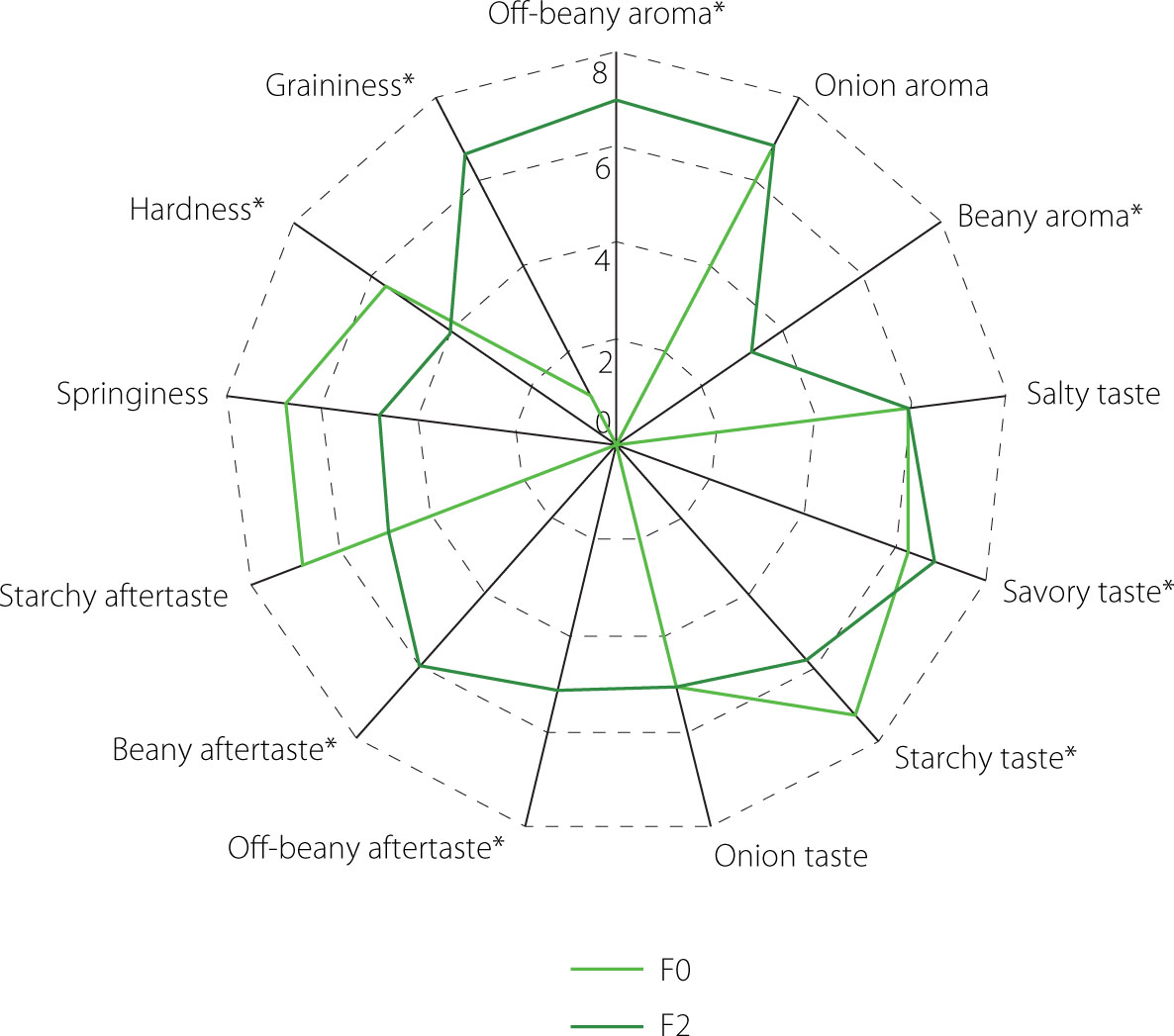
Thirteen sensory attributes were selected by the panel in QDA of the sago flour noodles and noodles made from sago flour and Bambara groundnut flour. These sensory attributes and intensity standards used are listed in Table 6. Scores of eight attributes exhibited significant differences (p<0.05) between F0 and F2, comprising two aroma, two taste, two aftertaste, and two mouthfeel attributes (Figure 2). The substitution of sago starch with 40% (w/w) Bambara groundnut flour resulted in a stronger off-beany aroma, beany aroma, savory taste, starchy taste, off-beany aftertaste, beany aftertaste, hardness mouthfeel, and graininess mouthfeel of the noodles compared to the sago noodles. The stronger beany aroma of noodles made from both flours compared to the sample without Bambara groundnut flour may be due to activity of lipoxygenase of Bambara groundnut [Kudre & Benjakul, 2013]. Lipoxygenase catalyzes the oxidation of polyunsaturated fatty acids, such as linoleic acid, resulting in aldehyde compounds that produce a beany aroma [Kudre & Benjakul, 2013]. Although blanching can inactivate the lipoxygenase [Chong et al., 2019], the decrease in enzyme activity depends on the temperature and time [Estiasih et al. 2025]. According to Nguyen et al. [2025], lipoxygenase activity remains at 32–63% after heating at 80–90°C for 25 min. Consequently, the sub-optimal heating temperatures and times lead to the incomplete inactivation of the lipoxygenase enzyme. Furthermore, the substitution of Bambara groundnut flour significantly enhances the savory taste of the noodles, due to its high glutamic acid content (18.31 g/100 g) [Aremu et al., 2025]. This amino acid is present naturally in protein-rich foods that produce a savory taste [Jahanshiri et al., 2022]. Moreover, it also enhances the graininess of the noodles, because the insoluble fiber content exceeding 2% is known to induce a gritty texture in the mouth [Aussanasuwannakul et al., 2022; Chakraborty et al., 2019], which is further exacerbated by insufficiently fine flour sieving during the processing [Iju et al., 2025].
Table 6
Sensory attributes and intensity standards used in the quantitative descriptive analysis of noodles.
Satiety index
The satiety index is a measure that evaluates the level of satiety produced by a test food compared to that produced by a standard food, and is expressed as a percentage [Forde, 2018]. The nutrient content of the tested noodles and wheat bread used as a standard food per 240 kcal, satiety scores, and satiety indices are shown in Table 7. A significant difference (p<0.05) was found in the satiety index between sago noodles (F0), noodles made from sago and Bambara groundnut flours (F2) and wheat noodles. The satiety index values of the tested foods, in the order of wheat noodles, sago noodles as control sample, and sago noodles with Bambara groundnut flour, were 90%, 113%, and 122%, respectively. The satiety index of the noodles made from sago and Bambara groundnut flours was significantly higher than that of the wheat noodles, indicating that the substitution of sago starch with 40% (w/w) Bambara groundnut flour resulted in a greater sense of fullness. As shown in Table 7, the sago noodles with and without Bambara groundnut flour significantly (p<0.05) reduced hunger, increased fullness, decreased desire to eat, and decreased food quantity compared to wheat noodles.
Table 7
Nutrient composition of a portion (240 kcal) of white bread, wheat noodles, and noodles made from sago flour (F0), and from sago and Bambara groundnut flours in a ratio of 60:40, w/w (F2), as well as satiety scores and satiety index for these food products.
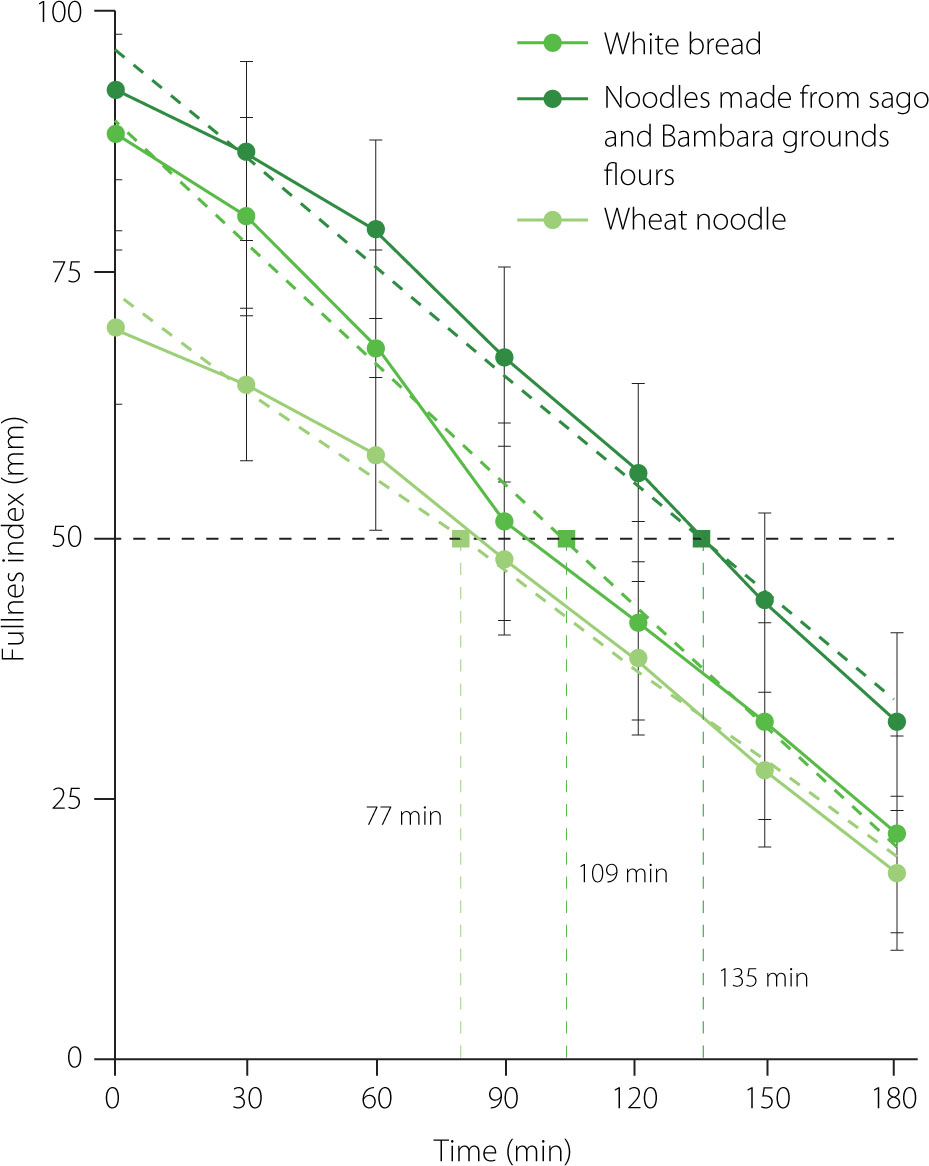
Figure 3 shows that the curve of the fullness index of the sago noodles with Bambara groundnut flour exceeds the standard white bread food curve, indicating that it can provide a longer feeling of fullness than white bread. The regression equations showed that sago noodles with Bambara groundnut flour (y= −0.344x + 96.354) reached a 50% level of fullness at 135 min. In comparison, white bread (y= −0.384x + 89.361) and wheat noodles (y= −0.296x + 72.911) reached the same level of fullness significantly faster, i.e., at 102 min and 77 min, respectively. Therefore, it can be concluded that the consumption of noodles made from sago and Bambara groundnut flours in a 60:40 (w/w) ratio can prolong the feeling of fullness for up to 45 min longer than white bread, and even further up to 58 min longer than wheat noodles. These findings are consistent with observations made by Ridwan et al. [2024], who reported that tuber-bread with 60% Bambara groundnut flour could prolong the feeling of fullness up to 95 min longer than white bread. The increased feeling of fullness was due to the fact that F2 portion served had the highest content of total fiber (5.7 g) compared to F0 portion (2.4 g) and wheat noodle portion (1.1 g) (Table 7). According to Palupi et al. [2024], the consumption of foods high in fiber can increase the feeling of fullness or satiety. Dietary fiber, particularly soluble fiber, plays a significant role in increasing satiety through several physiological mechanisms throughout the digestive tract [Hervik & Svihus, 2019]. Due to its water solubility and gel-forming ability, soluble dietary fiber may increase the viscosity of gastrointestinal digesta. Higher viscosity can slow down gastrointestinal transit, delay gastric emptying, and increase gastric distension [Ariyarathna et al., 2025]. Increasing the gastric distention can inhibit the secretion of the ghrelin hormone, which sends signals to the hypothalamus to suppress hunger and stimulate satiety [Hervik & Svihus, 2019]. In addition, dietary fiber can increase oral processing time and effort needed for mastication. A longer oral processing time seems to stimulate cephalic phase responses, and these are deemed to contribute to satiety [Hervik & Svihus, 2019]. Thus, the sago with Bambara groundnut noodles can be used as an alternative high-fiber staple food that can increase the feeling of fullness and reduce the consumption of additional foods, which often contribute to excess calorie intake.
CONCLUSIONS
Instant noodles developed from sago starch enriched with Bambara groundnut flour exhibited superior nutritional quality and satiety effects compared with conventional wheat-based instant noodles. Their higher protein and dietary fiber contents contributed to enhanced fullness, highlighting the potential role of these noodles in promoting appetite control. Beyond their nutritional advantages, the use of sago and Bambara groundnut – both climate-resilient and locally available crops – supports diversification of raw materials and reduces dependence on imported wheat. Overall, this study provides evidence that climate-resilient crops can be successfully transformed into acceptable, nutrient-dense, and highly satiating instant foods. The sago–Bambara groundnut noodle represents a promising functional and sustainable alternative for future food innovation, particularly in regions vulnerable to climate change and food insecurity. Furthermore, future research is needed to optimize the physicochemical properties of the resulting flour, thereby improving the sensory and textural quality of the noodles.